
The Playboy from Scotland
“Just why is it that Scotsmen have such a knack for stirring up trouble on these islands?”
Henry Gordon Veitch was the British consul on Madeira from 1809 until 1834, a considerable time to make an impression on these rapidly developing mid-Atlantic islands!
“Which he duly did!”
Veitch was born to a noble family in the Scottish Border town of Selkirk. He came to Madeira early in his career to take up the post of Consul General.
In the early 1800s, Madeira’s strategic position in the Atlantic was not lost on the Brits. Despite recently losing the American War of Independence, the British Empire was still in ascendance. So Veitch’s appointment to these mid-Atlantic islands was significant.
WINE TIME
Besides his consular duties, Veitch soon prospered especially in the wine trade. The Madeira Wine business was booming! Soon after the islands’ discovery in 1419, sugar cane was the main cash crop, but it migrated west to the sunny shores of the Caribbean, Hawaii and Brazil.
Fortified Madeira Wine quickly filled the gap and British merchants settled in Funchal to take advantage of burgeoning export markets in North America, the West Indies and the UK.
Veitch being an industrious sort, also dabbled in shipping supplies, a spot of tea planting in the mountains and even some smuggling on the side. Allegedly!
As Britain’s chief envoy, Veitch became an integral part of Madeira's cultural life. At the time, there were as many as 700 Brits living more or less full-time on the island.
THE QUINTAS
Veitch was amassing a considerable fortune and was responsible for the building of several impressive properties to reflect his growing status.

Now the ‘Madeira Wine Institute’, this was Veitch’s first, rather impressive townhouse overlooking the centre of the city of Funchal.
His primary Funchal residence occupied a prominent position overlooking the ‘Old Town’. Today, it’s the ‘Madeira Wine Institute’, a building well worth appreciating for its striking maritime architecture.
Further west, the Consul’s seaside domiciliary was Quinta Calaça, close to the water’s edge. The tiny salmon-pink building is now part of Clube Naval of Funchal and is dwarfed by towering hotel developments. Interestingly, Clube Naval seems to have its own microclimate where, no matter what’s going on in nearby Funchal, it’s nearly always sunny and warm. One wonders if Veitch was cogniscent of that fact and chose the site accordingly.
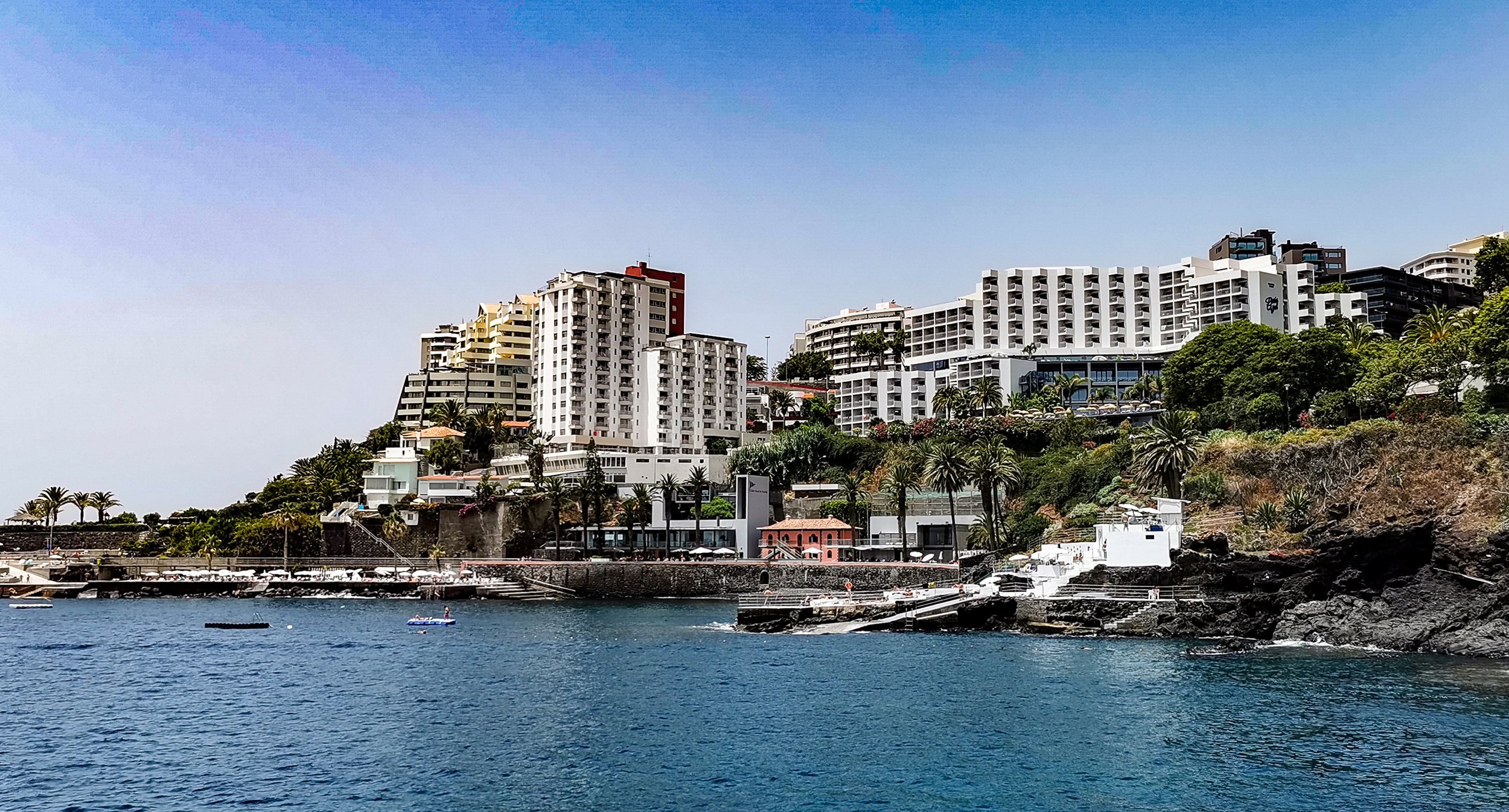
Veitch’s former beachside property is dwarfed by modern hotel blocks and is now part of Clube Naval.
JARDIM DA SERRA
The property dearest to his heart, however, sits high above the fishing village of Câmara De Lobos and was his countryside retreat of ‘Quinta do Jardim da Serra’.
Here, over the years the British Consul General developed a large estate with beautiful gardens that showcased the many exotic species of trees and flowers he’d collected - as it still does! Here you find today Madeira’s tallest tree, a gigantic eucalyptus that reaches a full 65 metres.
“Being the eccentric Scotsman that he was, Veitch had one or two peculiarities... ”

Quinta do Jardim da Serra was Veitch’s favourite retreat where he came to enjoy the local ‘attractions’. It is now a most comfortable 5-star hotel!
FLYING THE FLAG

One of which was that he insisted only the local ladies be allowed to handle the saplings and seedlings, because, he had decided, their ‘feminine touch’ conveyed fertility!
This was not the only tactile talent that Veitch saw in the local ladies. At Quinta Jardim da Serra, Veitch would invite a different girl from the neighbourhood by devising a coloured flag system to alert his ‘dame da noite’…!
“Bringing a whole new meaning to the phrase ‘nailing your colours to the mast”
They reckon the saucy Scotsman had as many as 30 girls at his beck & call and today, so they say, there’s a predominance of blue-eyed blondes in the Jardim da Serra area.
ROYAL CONNECTIONS
As for his own lineage, Veitch’s roots can be traced all the way back to King Edward III. His grandsires were the Lairds of Traquair House and Dawyck House in the Scottish Borders. That’s pronounced ‘Doik’ (Dawyck), the same as ‘Hoik’ (Hawick), the nearby Scottish Borders town.
Dawyck House & Gardens, by the way, offers one of Scotland’s finest arboreal collections including some of Britain’s oldest and tallest trees. Perhaps this is where Henry got the inspiration for ‘planting seeds’.
Veitch’s son, also Henry Gordon, went on to become a prominent sea captain and surveyor for the Royal Navy and just happened to be the grandfather of Sir Noel Coward, the famous English ‘bon vivant’ and playwright.

Noel Coward was Henry Veitch’s great-grandson.
NAPOLEON’S WINE

The HMS Northumberland took Napoleon to his final excile in St Helena far out in the south atlantic
“Do you realise that when this wine was vintaged, Marie Antoinette was still alive?””
When the deposed emperor, Napoleon Bonaparte was on his way to final exile on the remote island of St Helena in the South Atlantic, his British captor’s ship called in at Madeira to re-supply before the long journey south.
Veitch, being the British Consul General was the only person allowed to board the vessel. Perhaps he felt a touch of empathy for Napoleon who had been First Consul of France from 1799 to 1804 before becoming Emperor of the French Republic from 1804 until 1814, the same period Veitch took up his consular duties. He brought gifts and provisions for the ousted emperor including a ‘pipe’ of Madeira Wine, a large barrel containing the equivalent of 600 bottles.
Rumour has it that Napoleon gave Veitch a handful of gold coins for his kindness and these Veitch buried beneath the foundation stone of the Anglican church in Funchal, the design and building of which Veitch had a leading hand in.
On St Helena, the barrel of fortified Madeira wine was never opened and following Napoleon’s somewhat sudden and somewhat mysterious death in 1821, it was returned to Madeira.
It was decanted into 200 bottles of 1792 Sercial suitably labelled the ‘Battle of Waterloo’.
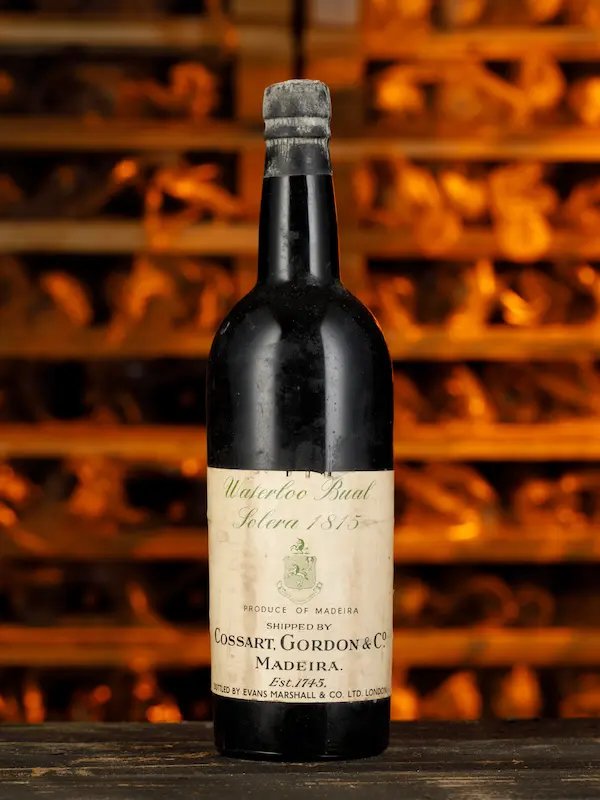
These bottles are now extremely rare and valuable a single bottle selling for around 2000 pounds.
WINSTON’S WINE
When he visited the island of Madeira in the early 1950s, one was presented to Sir Winston Churchill. Staying at Reid's Palace, Sir Winston insisted on pouring a glass for his guests, commenting "Do you realise that when this wine was vintaged, Marie Antoinette was still alive?"
FINAL RESTING PLACE
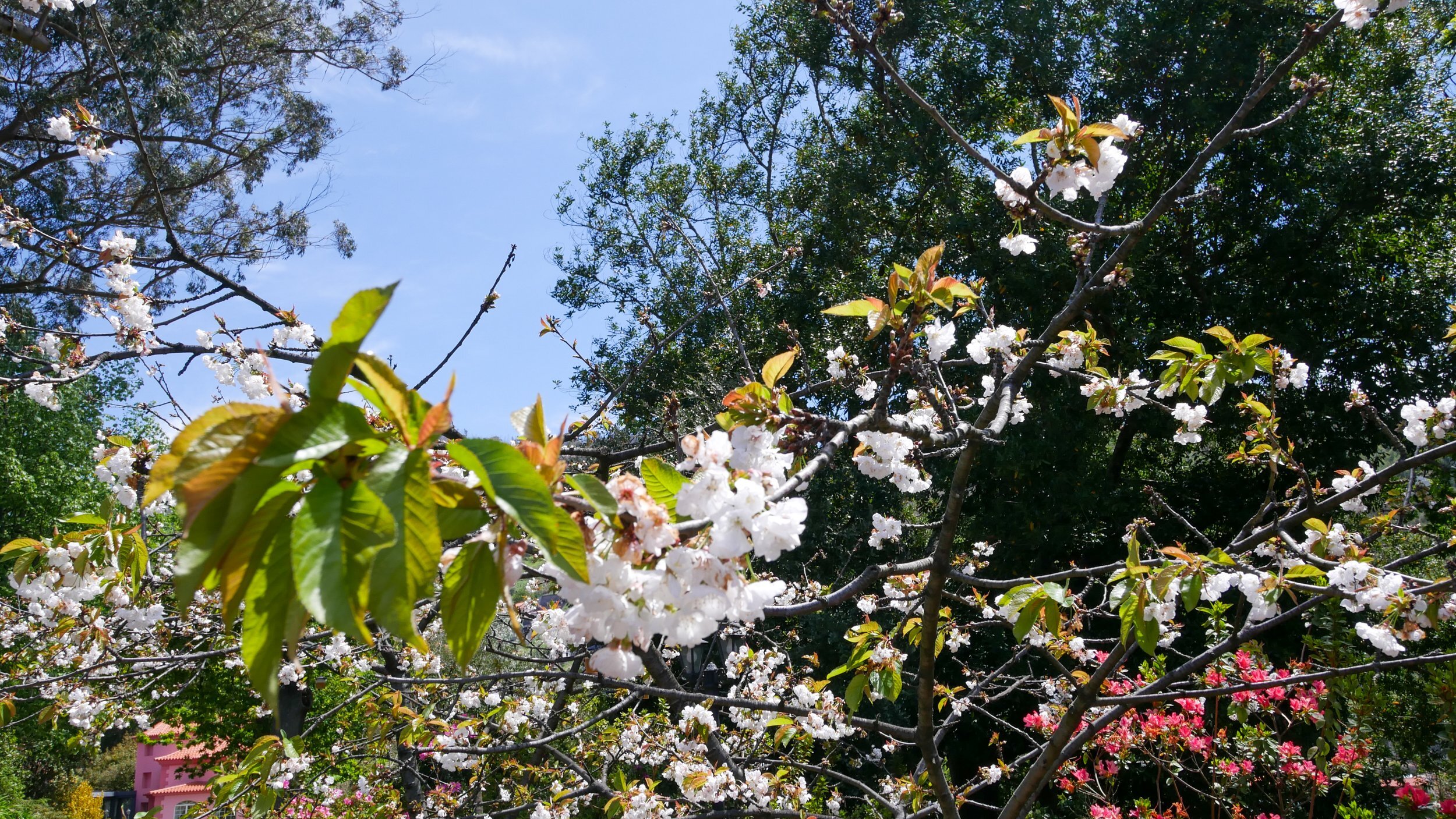
The beautiful gardens of Quinta do Jardim da Serra was where Veitch enjoyed most.
Following his death in 1857, Veitsch was interred in the British Cemetery in Funchal where the Catholic hierarchy allowed non-Catholics to be buried. (Previous to this they were tossed off the cliffs at Garajau or unceremoniously dumped at sea).
But his wife, Caroline knew her husband would not be happy so far away from his beloved Quinta do Jardim da Serra so she built a mausoleum, surrounding it with heather, trees and shrubs to block it off from prying eyes.
Here her husband’s remains were relocated. During the dark night of ‘the move’, her helpers used torches to light the way. Locals today still share stories of unearthly lights and dark spectres being seen near the Quinta.
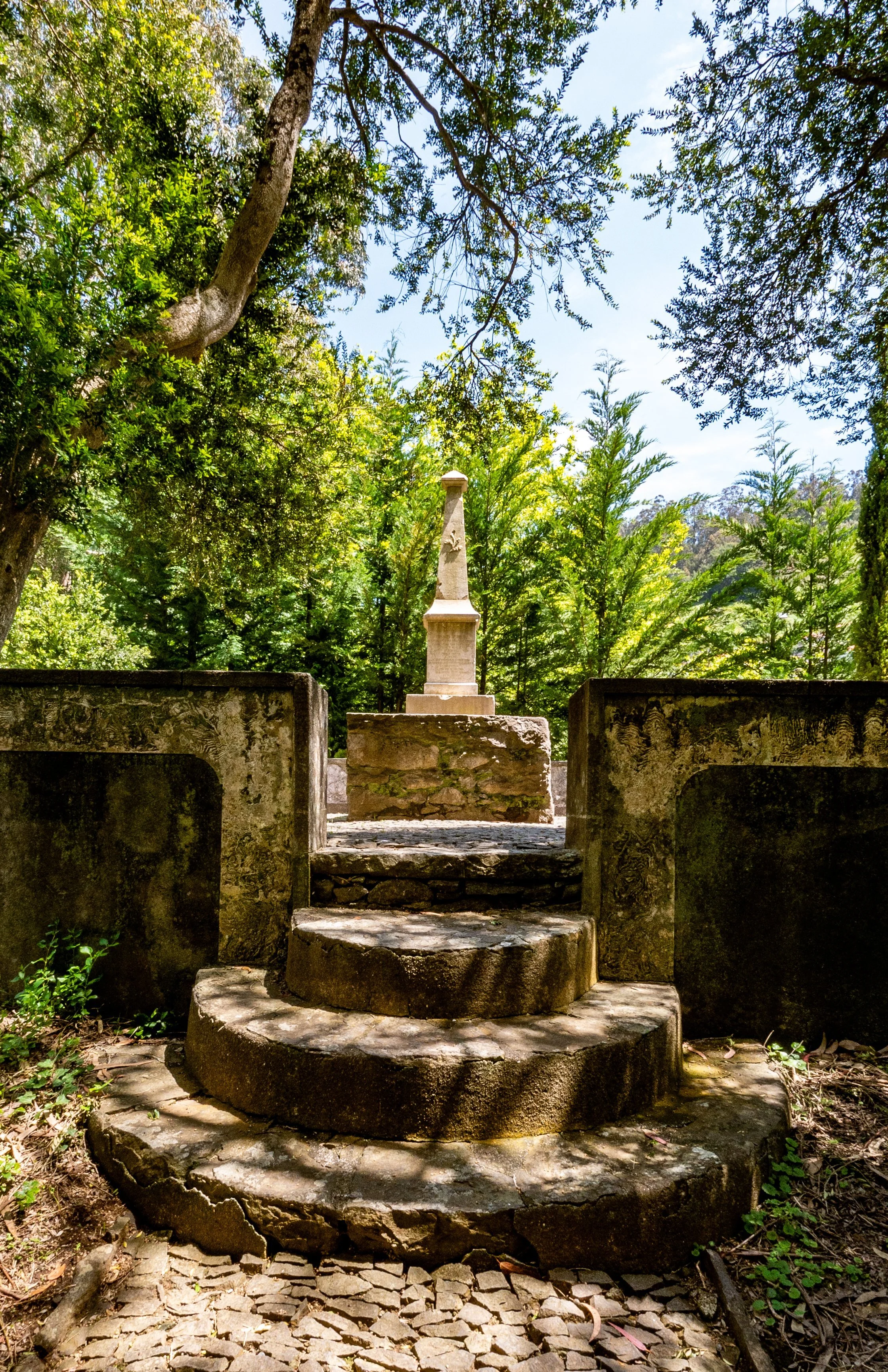
Veitch wanted to be buried at Quinta Jardim da Serra with his beloved dog. So his widow, Carolina built a mausoleum on the property and secretly had his earthly remains relocated here.